
Functional Foods in Thailand | Regulatory Strategy, Claims & Thai FDA Framework
Functional foods are often described as one of the most promising segments in the global food industry. In Thailand, however, they are also one of the most frequently misunderstood from a regulatory perspective.
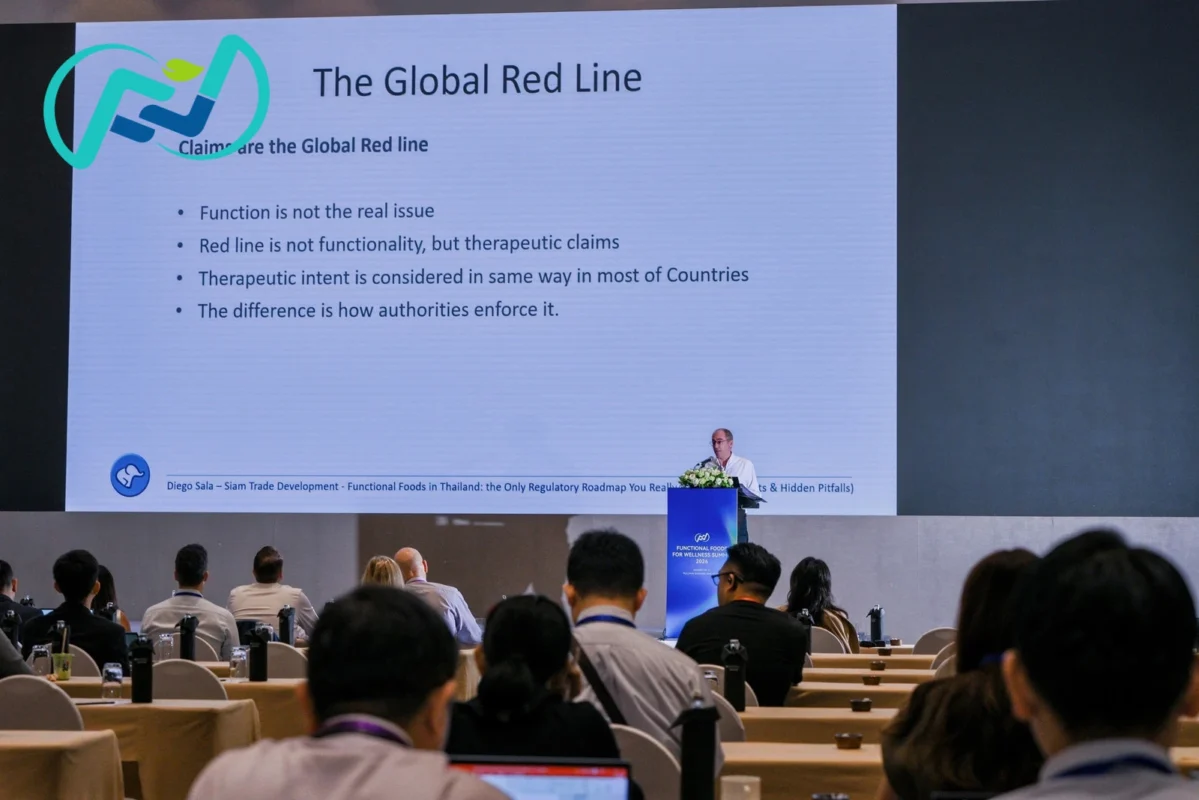
This article summarizes the key points discussed during the session “Functional Foods in Thailand: the Only Regulatory Roadmap You Really Need (Dos, Don’ts & Hidden Pitfalls)”, presented at the Food & Future Wellness Summit in Bangkok. The objective is not to explain regulations article by article, but to clarify how the Thai regulatory system actually works—and why strategy matters more than shortcuts.
Functional Food Is Not a Regulatory Category
From a regulatory standpoint, “functional food” is not a formal category under Thai FDA. It is a market positioning concept, not a legal classification.
What determines regulatory treatment is not functionality itself, but claims, especially those that imply therapeutic intent.
This principle is consistent across most jurisdictions. What differentiates Thailand is not the definition of risk, but how early and strictly it is controlled.
Thailand’s Pre-Market Model: Barrier or Filter?
Thailand applies a strong pre-market regulatory model. Products are assessed before entering the market, not adjusted afterward.
This approach is often perceived as restrictive, but in practice it functions as a filter: it forces companies to clarify classification, claims, and consumer expectations before commercial exposure.
When misunderstood, this system becomes a barrier. When used correctly, it becomes a risk-management tool.
Claims Matter More Than Ingredients
Thai FDA does not evaluate products solely based on formulation. Authorities assess:
-
The intended target consumer
-
The expected consumer understanding
-
The implied benefit
-
Whether that benefit crosses the boundary between food and medical intent
A compliant ingredient list does not compensate for misaligned claims. In Thailand, claims define the regulatory box.
The False Dichotomy: Functional Food vs Supplement
A common mistake is treating functional foods and supplements as interchangeable categories. They are not.
-
Supplements are a defined food subcategory
-
“Functional” is a positioning that may apply across multiple regulatory frameworks (dietary supplements, special purpose foods, weight control foods, or even traditional herbal medicine)
Misunderstanding this leads directly to wrong classification, which is the primary reason most projects fail.
Regulatory Drift: The Hidden Risk
One of the most underestimated risks in Thailand is regulatory drift.
This occurs when:
-
Marketing language gradually strengthens
-
Claims evolve after approval
-
The original classification can no longer support the product positioning
At that point, Thai FDA does not “adjust” the product. It reclassifies it, often triggering suspension, customs issues, or project restart.
Approval Is Not the End
Regulatory approval is a milestone, not an endpoint.
Risk continues downstream through:
-
Customs clearance
-
Post-market surveillance
-
Advertising and online promotion
Silence from authorities does not equal acceptance. Responsibility starts on day one and remains with the license holder.
The Three Core Don’ts
Experience shows that avoiding a few recurring mistakes prevents most regulatory failures:
-
Do not start from marketing concepts
-
Do not rely on foreign approvals or online visibility
-
Do not change claims after submission
In Thailand, consistency is not optional. It is part of compliance.
What Actually Works: The Strategic Approach
Effective projects follow a different logic:
-
Classify first, then formulate and design claims
-
Build claims specifically for Thai FDA, not for global reuse
-
Treat pre-market review as structured risk management
Thailand’s regulatory framework is not hostile to innovation, but innovation without a regulatory box has no market access.
Strategy Costs Less Than Fixing Mistakes
Wrong classification, overambitious claims, or assumptions based on other markets often lead to:
-
Complex registration pathways
-
Customs blocks
-
Reclassification
-
Suspensions
-
Project restarts
In this context, regulatory strategy functions as risk insurance. And insurance is always cheaper than accidents.