

BOI Promotion Application: Why the Project Comes Before the Company
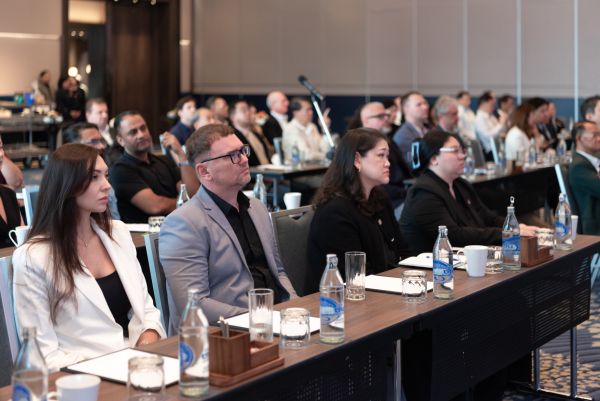
During a recent seminar on BOI incentives and regulatory outlook for SMEs, organized by the Thai-Russian Chamber of Commerce, we were invited to participate as panelists to discuss practical approaches to BOI promotion application and investment structuring in Thailand.
One point emerged very clearly from the discussion—both on stage and in the Q&A with SMEs and foreign investors:
BOI promotion is granted to projects, not to companies.
This principle is still widely misunderstood. Many BOI promotion applications are drafted as corporate requests for incentives, focusing on the applicant’s profile rather than on the concrete investment project to be implemented in Thailand.
From a regulatory perspective, this approach is structurally incorrect. A BOI promotion application is not an evaluation of a company’s needs or strategic intentions, but an assessment of a specific project—its scope, activities, investment structure, and operational substance in Thailand.
Understanding this distinction is essential to determine whether a project is BOI-eligible, BOI-defensible, and ultimately approvable by the Thailand Board of Investment.
How the Thailand Board of Investment Evaluates a Promotion Application
From a regulatory standpoint, the BOI assesses applications through a project-centric lens, focusing on:
- Nature of the activity (manufacturing, service, R&D, digital, etc.)
- Technical and operational substance
- Physical and organizational presence in Thailand
- Alignment between activity, incentives requested, and execution model
The legal entity is a container. The project is the subject of evaluation.
Project-Based vs Company-Based BOI Promotion Application
Company-based logic (incorrect approach)
- “We need tax incentives to expand”
- “We plan to hire staff in the future”
- “We intend to localize operations later”
These statements are not assessable by BOI officers.
Project-based logic (correct approach)
- Defined activity with a clear scope
- Identifiable inputs, outputs, and processes
- Executable timeline and milestones
- Tangible assets, systems, or deliverables in Thailand
A BOI promotion application succeeds only when the project stands on its own, regardless of the company’s broader ambitions.
What a BOI Promotion Application Is (and Is Not)
It is:
- A structured regulatory submission
- A technical description of an investment project
- A justification of incentives based on economic and operational substance
It is not:
- A business wish list
- A negotiation on future intentions
- A financing or fundraising document
This distinction explains why many applications fail despite being commercially sound.
Why Incentives Follow the Project — Not the Other Way Around
BOI incentives are consequential, not generative.
- Incentives do not make a weak project viable
- Incentives do not compensate for lack of substance
- Incentives do not replace regulatory alignment
In practice, BOI officers first verify whether the project:
- Qualifies under an eligible BOI category
- Is realistically executable in Thailand
- Produces measurable economic or technological value
Only after this assessment are incentives considered.
Common Structural Errors in BOI Promotion Applications
- Designing the project around incentives instead of eligibility
- Submitting high-level descriptions without operational detail
- Confusing future expansion plans with current project scope
- Treating BOI as a negotiation forum rather than a regulatory authority
These errors are structural, not procedural—and cannot be fixed with better wording.
A Regulatory Outlook, Not a Sales Narrative
A robust BOI promotion application uses:
- Neutral, technical language
- Verifiable assumptions
- Internally consistent project logic
Celebratory tone, ambition-driven claims, or speculative growth narratives weaken—not strengthen—the application.
Conclusion: Start From the Project
In Thailand, BOI promotion is granted to projects, not companies.
Any successful BOI promotion application must therefore begin with a single question:
If this project were assessed independently of the company requesting it, would it still stand?
If the answer is yes, incentives may follow.
If not, no structuring can compensate for it.
Telephone No.021006351
